

What are the Concerns?
Parents, educators, and mental health professionals have noticed changes in teens’ behaviors since the onset of constant mobile phone use. It’s become an appendage that they can’t voluntarily control.
Changes would be increases in social anxiety, lack of focus, and self-absorption. Other changes include decreases in memory and recall, attention, communication skills, and basic self-care like brushing teeth, showering, and eating.
The teen years are a period of experience and growth that leads them to adulthood. It seems this period is slowed or delayed.
Where there is smoke, there is fire.
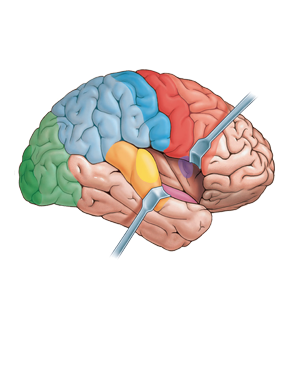
Smart phone addiction effects brain matter.
-
Brain imaging studies in college students and young adults with “mobile phone dependence” or “smartphone addiction” show altered gray matter volume in regions involved in decision‑making, emotion regulation, and impulse control (e.g., orbitofrontal cortex, anterior insula, temporal and parahippocampal areas). pmc.ncbi.nlm.nih.gov/articles/PMC9739413
-
Several studies report changes in white matter integrity (the quality of the brain’s communication cables) in young adults with smartphone dependence, especially in tracts involved in cognitive control and emotional processing. pmc.ncbi.nlm.nih.gov/articles/PMC5673664
-
A systematic review and meta‑analysis of excessive smartphone use found consistent structural and functional differences in frontal and limbic regions compared to controls, but highlighted that most work is small and cross‑sectional, and often in older teens/young adults rather than younger adolescents. pmc.ncbi.nlm.nih.gov/articles/PMC10779052/
Does phone use “reduce” gray or white matter?
-
Some studies report lower gray matter volume in certain regions in people with smartphone addiction compared to controls, and reduced integrity of white matter tracts; this is where the concern about “loss” of gray/white matter comes from. sciencedirect.com/science/article/abs/pii/S0306460319313802
-
However, these studies are mostly cross‑sectional (snapshots in time), so they cannot say whether phone use caused the changes, whether pre‑existing brain differences made some teens more vulnerable to addiction, or whether changes are reversible if use is reduced. pmc.ncbi.nlm.nih.gov/articles/PMC9739413
-
Current evidence suggests association and correlated differences rather than proven, permanent damage; researchers are cautious about over‑interpreting findings, especially in the still‑developing adolescent brain. pmc.ncbi.nlm.nih.gov/articles/PMC10540760/
Wearing dental metal retainers
Scientists found that using a mobile phone for longer periods of time causes more nickel to leak into your saliva if you have a permanent retainer. This happens because most retainers are made of stainless steel, and stainless steel contains nickel. Even without a retainer, though, phone use alone can cause a type of cell stress called “oxidative stress,” which happens when phone radiation increases certain unstable molecules that can damage cells.
At a tiny, cellular level, phone radiation seems to affect special doorways in our cells called calcium channels. These channels control how calcium moves in and out of cells, which affects things like how genes turn on and off and how cells talk to each other. When phone radiation disrupts this process, it can also mess with the outer wall of cells (the membrane), making it harder for cells to work normally.
Interestingly, researchers also discovered that metal objects near your head, like a retainer wire, can actually make phone radiation stronger in that specific spot, sometimes by hundreds of times more than usual. While scientists say the real-world risk is still low at typical phone power levels, this means having a metal retainer near your phone during calls could create a small “hot zone” where both metal leaking and cell stress happen more than they would otherwise.
Sources: pmc.ncbi.nlm.nih.gov/articles/PMC6025786/, pubmed.ncbi.nlm.nih.gov/30007574/, pmc.ncbi.nlm.nih.gov/articles/PMC12191447/
Break Your Teen’s Screen Addiction
Daniel Wong, an author and teen parenting coach based in Singapore, will be launching a concise course in October 2026 focused on helping parents address teen screen addiction. Registration details will be shared here as soon as the link goes live.
In the meantime, Daniel offers a free e-book for parents seeking to help their teen become more motivated, responsible, and resilient. Drawing on proven coaching principles, it offers practical strategies parents can apply to encourage lasting, positive change—without resorting to nagging or lecturing.
Guardian Airwaves LLC is focused on changing these statistics by providing tailored education technology and career support for ADHD and neurodiverse individuals to unlock economic opportunities and remove barriers to sustained employment.
